Fake Motor Insurance Policies Are Back: How to Check Your Car and Bike Cover Is Genuine

Buying cover directly from the insurer's own website or app is the simplest way to avoid a forged paper. The money goes into the insurer's payment gateway, and the policy PDF comes from the insurer's own email address
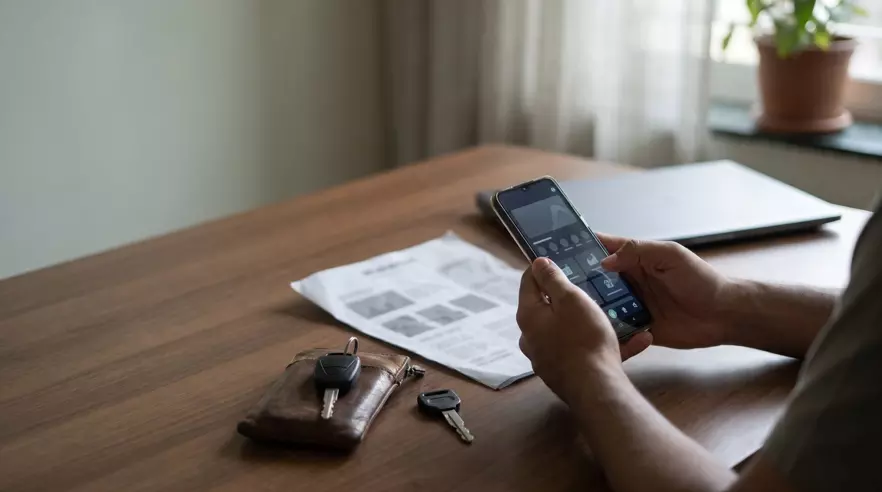
To know if your car or bike cover is genuine, look up the policy on the insurer's own website and on the VAHAN record for your vehicle. Fake motor insurance policies are back in circulation, and a forged paper can look just like a real one.
What Police Found in the Hyderabad Fake Insurance Racket
Police in Hyderabad found a gang that made copies of real policies with small changes. In February 2026, The Hindu reported that nine people were arrested in raids in Jeedimetla, and 441 forged vehicle insurance certificates were seized.
The papers carried the names of well-known insurers. The premium shown on them added up to about Rs 91.7 lakh. Police said the group had been active since 2020, with cases in Hyderabad and Karimnagar.
The people arrested included an insurance agent, a private RTA agent, staff from a mobile pollution-check van and drivers. Their jobs put them in touch with vehicle owners every day. The fake papers came to light only when accident claims were checked.
Police found four tricks that made the papers look real:
• Only the last four digits of a real policy number were changed.
• The same cover note number (the temporary proof of insurance given before the full policy) was used on different policies.
• The code printed on the policy was edited, so scanning it opened details that looked genuine.
• Every policy showed the same 35% discount, whatever the vehicle.
A second kind of fraud uses a real insurer's system with false details. In July 2025, the Indian Express reported a Delhi Police case in which one insurer said agents had issued fake policies to over 80,000 customers. Those policies carried wrong phone numbers, email addresses and vehicle models.
Buying Cover Directly from the Insurer
Buying cover directly from the insurer's own website or app is the simplest way to avoid a forged paper. The money goes into the insurer's payment gateway, and the policy PDF comes from the insurer's own email address.
Many owners pick up a policy at an RTO counter, a pollution-check van or from a roadside agent. The Hyderabad gang included people who worked at exactly these places.
When you buy bike insurance online yourself, you type in the registration number and the price shows before you pay.
The engine number, chassis number and model also appear on screen. Match them with your registration certificate (RC) before the policy is issued.
Buying through an agent or a dealer is also fine. Confirm the finished policy with the insurer yourself, and do not rely only on what the agent says.
The same care applies to a family car. If you buy car insurance online, keep the payment email or SMS with the policy. A genuine purchase leaves a receipt from the insurer that matches the premium on the policy.
Signs of a Fake Car or Bike Insurance Policy
A fake car or bike insurance policy usually shows at least one sign you can spot at home. Keep your policy, your RC and your payment receipt side by side, and compare them.
Warning sign What a genuine policy shows
Premium far below other quotes, or a A price close to other quotes for flat discount for every vehicle the same vehicle
Payment to a personal bank Payment through the insurer's account or UPI ID website, app or payment gateway
Old tax wording such as "service tax" GST shown on the premium
Policy sent only as a WhatsApp image A PDF from the insurer's
or an edited PDF email address or website
Spelling errors, blurred logos or odd fonts Clean branding and correct
names
Engine number, chassis number or model The same details as your RC,
that differs from the RC letter for letter
Helpline or email on a free mail address Contact details on the insurer's
own domain
Pressure to pay at once is another warning sign. So is a renewal call from a phone you cannot match to the insurer's website.
Many policies now carry a QR code that you can scan with your phone. Treat a working scan as a first check only, because the Hyderabad gang edited the codes on its papers.
How to Verify a Policy with the Insurer
Verifying a policy with the insurer is the strongest check you can do, because a forger cannot change the insurer's own records. Use contact details you find yourself, never the ones printed on the paper in doubt.
1. Search for the insurer's official website and open it directly. Do not use a link sent on WhatsApp or by email.
2. Find the policy download or policy status page.
3. Enter the policy number, the registration number, or the engine or chassis number.
4. Match your name, the vehicle model and the start and end dates with your paper.
5. If the site shows no record, call the toll-free line listed on the insurer's website.
A "policy not found" message is a serious red flag. So is a record that shows a different vehicle, a different name or a lower premium than you paid.
Ask the insurer to email you a fresh copy of the policy. A copy from the insurer's own email address is one you can trust.
How to Check Insurance Status on VAHAN
Checking insurance status on VAHAN shows which insurer the transport department has on record for your vehicle, and until what date. VAHAN is the national vehicle registration database of the Ministry of Road Transport and Highways.
1. Open the Parivahan website and choose Know Your Vehicle Details.
2. Log in with your mobile number and the verification code.
3. Enter the registration number exactly as it appears on your RC, then the captcha.
4. Note the insurer name and the insurance validity date on the screen.
The mParivahan app on your phone shows the same details. Sign in with your mobile number and search by registration number.
The insurer name and end date on VAHAN should match your policy. A different insurer, an older date or no insurance at all means you should call the insurer at once.
A newly bought or renewed policy may take some days to appear. In that case, open the policy issued by the insurer and confirm it with the insurer while the record updates.
VAHAN shows only that a policy exists and its end date. Add-ons and other terms are in the policy itself, so keep both checks.
Steps to Take If You Suspect a Fake Policy
A fake policy means your vehicle has no valid insurance, so stop driving or riding it on public roads until you buy genuine cover. Third-party cover, which pays for injury or damage you cause to others, is compulsory under the Motor Vehicles Act.
1. Buy a genuine policy straight away from the insurer's website or app.
2. Keep the fake policy, the payment receipt, chat messages and the phone of the person who sold it.
3. Tell the insurer whose name was used, so it can flag the forged policy.
4. File a complaint at your local police station, or on the National Cyber Crime Reporting Portal if you paid online.
5. If a licensed agent or an insurer does not help, complain to IRDAI on 155255 or at complaints@irdai.gov.in.
Ask your family to look at their own vehicle papers too. The Hyderabad gang sold 441 forged certificates through its agents.
Frequently Asked Questions
What happens if I drive with a fake insurance policy?
Driving with a fake policy counts as driving uninsured. Under Section 196 of the Motor Vehicles Act, the fine is Rs 2,000 or up to three months in jail for a first offence, and Rs 4,000 for a repeat offence.
Can I raise a claim with a fake car insurance policy?
A claim on a fake car insurance policy will not be paid, because no insurer issued it. You would have to pay for your own repairs and for any damage or injury caused to others.
Is it safe to buy car insurance through an agent?
Buying car insurance through an agent is safe when the agent works for a registered insurer. Pay only through the insurer's gateway, and confirm the finished policy on the insurer's website yourself.
How can I find the insurance details of a used car or bike before buying it?
The insurance details of a used car or bike show up in a VAHAN or mParivahan search by its registration number. The screen shows the insurer name and the date the cover ends, which should match the owner's policy.
Can the IIB portal show a policy I bought last week?
The IIB portal, run by the Insurance Information Bureau, often cannot show a policy bought last week. Its data is updated with a lag of weeks or more, so use the insurer's website or VAHAN for a new policy.
Key Takeaways
• Fake motor insurance papers are back. Police in Hyderabad seized 441 forged certificates in February 2026, made to look like real policies.
• A QR code or a neat paper copy is not proof. The gang edited the codes and changed only the last four digits of real policy numbers.
• Every policy needs two checks. Look it up on the insurer's own website or helpline, then on the VAHAN record for your vehicle.
• Pay only through the insurer's own channels. Never send the premium to a personal bank account or UPI ID.
Disclaimer: No Deccan Chronicle journalist was associated with the creation of the content. The Group also takes no responsibility for the content.